5 Ways to Use Boss Feedback for Career Growth
Use boss feedback to build a development plan with scripts, regular check-ins, and a wins log to boost performance and promotion chances.

Getting feedback from your boss - especially when it’s critical - can feel tough. But instead of brushing it off or taking it personally, you can use it to grow in your career. Here’s how:
- Understand Your Boss’s Style: Use tools like the Boss Decoder Tool to figure out their communication patterns and priorities. This helps you separate useful insights from delivery tone.
- Create a Development Plan: Break feedback into clear, actionable steps. Track your progress using a simple system and align your efforts with long-term goals.
- Prepare Responses: Use prepared scripts for tricky situations to handle feedback professionally and confidently.
- Track Progress: Regular one-on-one check-ins ensure you stay aligned with expectations and demonstrate your commitment to improvement.
- Leverage Feedback for Growth: Document your achievements and use them to negotiate promotions or improved compensation.
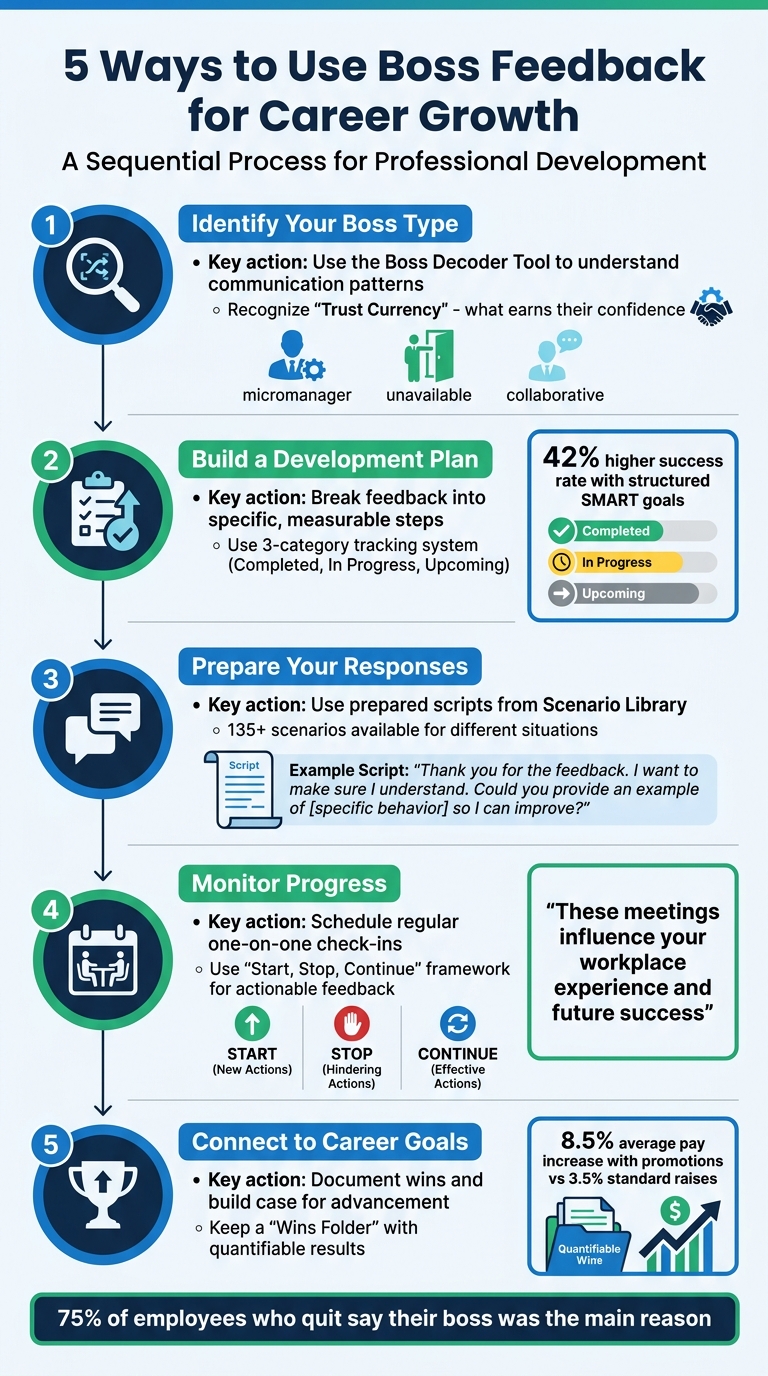
5-Step Framework for Using Boss Feedback to Advance Your Career - Infographic © MyDifficultBoss.com
How To Get Feedback From Your Boss - Amii Barnard-Bahn
sbb-itb-1bb7cb4
1. Identify Your Boss Type with the Boss Decoder Tool

Figuring out your boss's personality type can make a world of difference when it comes to understanding their feedback. The Boss Decoder Tool on MyDifficultBoss.com is designed to help you categorize your manager into specific archetypes. Whether they’re a micromanager, someone who’s always unavailable, or a leader who struggles with emotional cues, this tool helps you uncover the personality framework behind their feedback.
Recognizing your boss's type is about spotting patterns in their communication style and priorities. For instance, some managers rely on short, late-night emails, while others prefer well-organized reports or visual presentations. A micromanager may constantly provide feedback because they crave regular updates, not because your work is subpar. On the other hand, an unavailable boss might seem distant, but their lack of input could signal trust in your ability to handle tasks independently.
The tool also introduces the concept of "Trust Currency" - the specific actions that earn your boss's confidence. Knowing what builds their trust can help you align their feedback with your professional goals. For one manager, hitting deadlines might be the key. For another, it could be demonstrating creativity or showing exceptional attention to detail.
Spend a week observing how your boss communicates to collect useful insights. Once you’ve identified their type, you can practice what workplace experts call "Emotional Aikido." This involves separating actionable feedback from the emotional tone it’s delivered in. For example, even if your boss’s feedback comes across as harsh during stressful moments, the core message might still hold valuable lessons for your growth.
2. Build a Clear Development Plan
Once you understand your boss's style, the next step is to turn their feedback into actionable goals you can measure and track.
Start by breaking down feedback into specific, practical steps. For example, if your boss mentions that your presentations need work, don’t just aim to "do better." Instead, commit to concrete actions like including three data visualizations per slide, rehearsing ten times before presenting, or signing up for a public speaking workshop.
Use a simple three-category system - "Completed", "In Progress", and "Upcoming" - to track and share your progress. Tailor your updates to match your boss's communication style. This consistent flow of information not only keeps them in the loop but also shows you're taking their feedback seriously.
Another helpful habit? Send a quick "as discussed" email after verbal feedback. Summarize key points, deadlines, and instructions. This not only keeps you aligned with their expectations but also creates a record to refer back to if priorities shift.
Tie your short-term actions to your long-term career goals. Structured goals, like SMART goals, make success more likely - research shows they improve the odds by 42%. For instance, if your boss suggests improving analytical skills, a goal like "Earn Google Analytics certification by September 30, 2026" is far more effective than a vague aim to "get better at data analysis."
Finally, align your plan with your boss's Trust Currency. Focus on actions that build their confidence in you, like consistently meeting deadlines or providing clear, actionable insights. This approach not only helps you grow professionally but also strengthens your relationship with your boss.
3. Prepare Your Responses Using the Boss Difficult Scenario Library

Once you've outlined your development plan, the next step is refining how you respond to feedback in real time. Let’s face it - when your boss hits you with tough criticism, it can be hard to stay composed and professional on the spot. That’s where having a prepared script can make all the difference.
The Scenario Library from MyDifficultBoss.com offers over 135 scenarios complete with tailored scripts and strategies. These resources are designed to help you navigate specific challenges, whether it’s handling vague criticism, managing unreasonable deadlines, or addressing a boss with a condescending tone. The library is comprehensive, covering a wide range of boss types, including micromanagers, narcissists, indecisive leaders, or even those who seem perpetually absent.
Here’s how it works: Imagine your boss hits you with a vague critique like, “You’re not pulling your weight.” Instead of reacting defensively or freezing up, you could use a script such as: “Thank you for the feedback. Could you share one specific area where I can improve, like meeting deadlines or enhancing report quality?” This response not only acknowledges the feedback but also demonstrates your willingness to seek clarity and improve.
The scripts are crafted to help you respond neutrally and professionally while setting boundaries. For example, the library includes a section called "8 Scripts for Handling Unreasonable Boss Requests." These scripts guide you in pushing back against excessive overtime or unrealistic deadlines, ensuring you maintain both your work quality and personal balance.
The key is to practice these scripts ahead of time. By doing so, you’ll feel more confident and equipped to de-escalate tense moments. Instead of dreading feedback sessions, you can turn them into opportunities to showcase your professionalism and commitment to growth. With these tools, you’re not just responding to feedback - you’re actively advancing your career.
4. Monitor Your Progress with Regular Check-Ins
Once you've set your plan in motion, it's time to keep an eye on how things are going. Regular one-on-one meetings with your boss are a great way to make sure you're on track and not spending energy on tasks that don't align with your priorities.
Steven G. Rogelberg, Chancellor's Professor at the University of North Carolina at Charlotte, emphasizes the importance of these meetings:
"These one-on-ones can fundamentally influence your workplace experience, your relationship with your manager, and your future growth and success."
These conversations help clarify expectations, ensure your work aligns with broader company goals, and provide an opportunity to highlight your progress. Instead of asking a generic "How am I doing?", try using the "Start, Stop, Continue" framework to get actionable feedback. This approach encourages your manager to give specific input you can use right away.
For example, ask direct questions like, "What could I have done differently in that analysis?" or "What should I be prioritizing right now, and can you help me understand why?". Melody Wilding, author and executive coach, underscores the value of specificity:
"Without details, I might focus on the wrong areas."
Set up regular check-ins - whether weekly, biweekly, or monthly - and come prepared with thoughtful, development-focused questions. This not only shows initiative but also keeps you visible and strengthens your relationship with your manager. These ongoing conversations aren't just about tracking progress - they're about laying the groundwork for long-term growth and success.
Conclusion
Turning feedback from your boss into actionable steps is a powerful way to develop leadership skills that will serve you for years to come. This week, challenge yourself to identify five specific actions that show your commitment to growth and adaptability rather than defensiveness.
A striking statistic to keep in mind: 75% of employees who quit their jobs say their boss was the main reason. Learning how to handle tough feedback not only helps you navigate workplace challenges but also builds essential skills like emotional intelligence, effective communication, and conflict resolution - traits that distinguish future leaders. As Dominic Monn, CEO of MentorCruise, wisely states:
"Dealing with a difficult boss isn't just about survival - it's about developing leadership skills to serve you throughout your career".
The strategies we've explored - like using tools such as the Boss Decoder, aligning feedback with your career ambitions, and documenting your progress - can turn even the most challenging criticism into a clear path for growth. By preparing thoughtful responses and building trust with management, you position yourself as a proactive problem-solver, which is a huge asset for your career.
For those moments when feedback feels overwhelming, resources like MyDifficultBoss.com can make a difference. With insights from over 135 difficult boss scenarios, starter scripts, and tailored response strategies, you'll have the support you need to turn tough situations into opportunities for professional development. And remember this valuable perspective:
"Your boss's behavior is data about them, not a verdict about you", as an executive coach cited by MentorCruise explains.
Use that data to your advantage, and you'll be well on your way to becoming the leader you're destined to be. Start applying these strategies today to build the skills that will shape your success tomorrow.
FAQs
How do I figure out my boss’s “Trust Currency”?
To figure out your boss’s “Trust Currency,” start by observing what they prioritize in work relationships. Do they place a high value on reliability, honesty, or taking initiative? Pay close attention to their feedback - what do they praise, and what tends to draw criticism? These clues reveal what matters most to them.
You can also use tools like personality assessments to gain a deeper understanding of how they operate and what drives their decision-making. Once you know their key values, tailor your actions to align with those priorities. This approach not only builds trust but also strengthens your working relationship.
What should I do if my boss’s feedback is vague or emotional?
If your boss gives feedback that feels vague or overly emotional, it’s important to stay composed and professional. Politely request specific examples or details to help make the feedback more actionable. This demonstrates your commitment to improving and can help turn unclear input into something you can work with. If the feedback seems emotionally charged, take a moment to process it before responding, and aim to guide the discussion toward constructive solutions.
How can I turn feedback into a raise or promotion?
To leverage feedback for a raise or promotion, focus on using it as a tool to highlight your growth and contributions. Take constructive criticism seriously and use it to make meaningful improvements. Then, keep your boss informed about the progress you’ve made. Ask for specific, measurable goals related to promotions or salary increases, and ensure your actions align with those expectations. During feedback discussions, share your career ambitions to show your dedication to growing within the company.