Checklist for Managing Authoritarian Bosses
Adapt to an authoritarian boss: use data-backed communication, document agreements, set boundaries, build support, and protect your well-being.

Dealing with an authoritarian boss can be exhausting, but there are ways to make it work. These bosses thrive on control, demand obedience, and often avoid team input. Their behavior can hurt team morale, increase stress, and stifle creativity. However, by focusing on clear communication, demonstrating reliability, and setting boundaries, you can protect your mental health and navigate this challenging dynamic effectively.
Here’s a quick guide to manage and work with an authoritarian boss:
- Recognize their traits: Micromanagement, one-way communication, public criticism, and prioritizing obedience over initiative.
- Minimize conflict: Be clear, reliable, and back your ideas with data to match their preference for control.
- Set boundaries: Document agreements and expectations to avoid misunderstandings.
- Get support: Build a network of mentors and colleagues for advice and perspective.
- Know when to leave: If your health or values are at risk, consider moving on.
The goal isn’t to change their behavior but to manage the situation while safeguarding your well-being and career. One excellent resource for managing difficult bosses in general, and authoritarian bosses in particular, is a website called MyDifficultBoss.com. It’s got dozens of scripts, strategies and tips for dealing with all kinds of bosses.
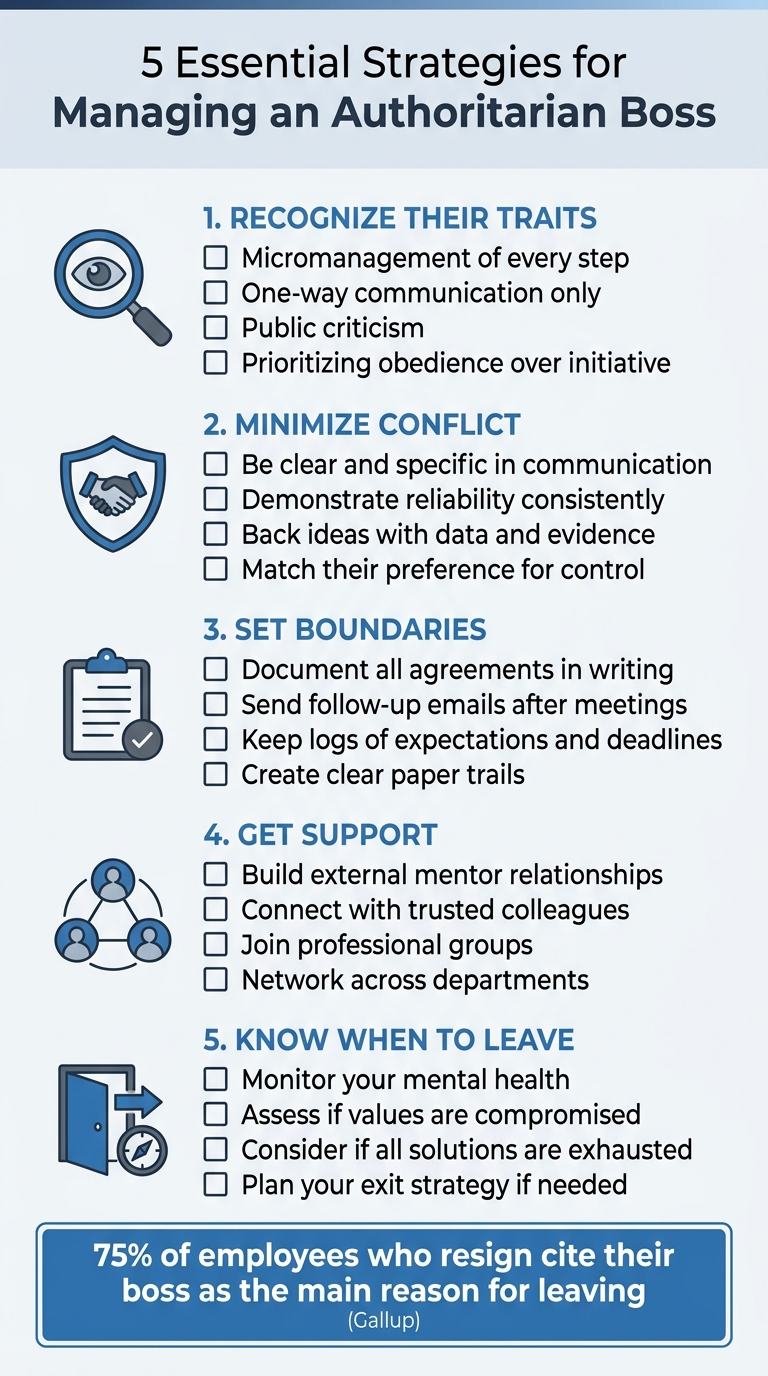
5 Essential Strategies for Managing an Authoritarian Boss - Infographic © MyDifficultBoss.com
How To Handle An Authoritarian Boss
sbb-itb-1bb7cb4
How to Identify an Authoritarian Boss
Spotting authoritarian tendencies in a boss can help you adapt your approach. These leaders focus on maintaining tight control over processes and rely heavily on one-way communication. Unlike bosses who push for high standards, authoritarian leaders prioritize obedience above all else. Recognizing these traits is key to effectively navigating their leadership style.
Checklist of Authoritarian Behaviors
Certain behaviors are telltale signs of an authoritarian boss:
- Unilateral decision-making: Decisions are made without consulting the team, even when team members have relevant expertise.
- Micromanagement: They don’t just set goals - they dictate every step of the process and monitor progress excessively.
- One-way communication: Conversations are dominated by their input, leaving little room for feedback or suggestions.
"Leaders' behavior that asserts absolute authority and control over subordinates and [that] demands unquestionable obedience from subordinates." - Wikipedia
Other common traits include:
- Social distance: They maintain a deliberate gap between themselves and their team to reinforce authority.
- Theory X mindset: They assume employees dislike work and require coercion or threats to perform.
- Obedience over initiative: Compliance is rewarded, while dissent or errors are punished. Constructive feedback is rare, and listening is minimal.
These behaviors define their leadership style and often create hurdles for teams. If you want to pinpoint what specific type of boss you have, check out this Boss Decoder Tool.
How These Behaviors Affect Your Team
Authoritarian leadership has a direct impact on team dynamics and productivity. Studies reveal that this approach often leads to higher employee turnover and reduces effectiveness on complex tasks, though it may temporarily boost performance on routine work.
Long-term exposure to this leadership style can breed resentment and even aggression within teams. Employees may experience physical stress symptoms, like "inbox anxiety", where seeing an email from the boss triggers a racing heart or jaw tension. The workplace can shift from a focus on innovation and performance to a culture of self-preservation. Practices like public criticism, shifting expectations, and withholding information create an environment where speaking up feels unsafe, ultimately stifling creativity and collaboration.
How to Build a Working Relationship with an Authoritarian Boss
Working effectively with an authoritarian boss means adapting to their leadership style rather than trying to change it. These types of leaders thrive on control and order, so the key is to demonstrate your value in ways that align with their priorities while maintaining your own professional boundaries.
Show Reliability and Competence
Authoritarian bosses place a high value on control and dislike surprises. The best way to build trust with them is to consistently demonstrate that you’re on top of your responsibilities. As Chris Joseph explains, “Autocratic bosses tend to crave control and power, and don’t like being surprised”.
When given a task, be clear and specific about your plan of action. For instance, instead of saying, “I’ll take care of it,” you could say, “I’ll pull the Q1 sales figures and organize them into an Excel report by 3:00 PM Thursday.” This level of detail reassures them that you’re competent and reinforces their sense of control.
Additionally, when proposing ideas or changes, back them up with solid data. Authoritarian leaders are more likely to respond to objective evidence than subjective opinions. Bring along case studies, statistics, or industry examples to support your suggestions. This approach not only shows that you’ve done your homework but also aligns with their preference for measurable results.
Align with Their Goals and Values
Once you’ve established yourself as reliable, take it a step further by connecting your work to their broader objectives. Authoritarian bosses often focus on discipline, efficiency, and outcomes. When presenting updates or ideas, frame them in terms of how they contribute to achieving key goals. Use direct and concise language, and approach sensitive topics tactfully. For example, instead of outright stating, “This deadline isn’t realistic,” you might ask, “If we prioritize this new task, should we adjust the deadline for the previous project?” This subtle shift allows them to feel in control while showing that you’re thinking strategically.
Clear communication is another way to strengthen your working relationship. If your boss struggles with interpersonal communication, offer to act as a liaison between them and the rest of the team. By positioning yourself as someone who can bridge the gap between their vision and the team’s needs, you become an indispensable resource - something authoritarian bosses are likely to value. If you looking for talking scripts when dealing with these types of bosses, have a look at MyDifficultBoss.com.
Communication and Feedback Techniques
Working with an authoritarian boss requires a tailored communication approach. Instead of trying to change their leadership style, focus on presenting ideas and concerns in a way that aligns with their preference for control. Clear, evidence-based strategies are key to engaging effectively.
Support Your Ideas with Data
Authoritarian bosses are more receptive to facts than emotions. When proposing changes or addressing decisions, back your points with solid data. For example, you might say, "I'll present my top three data points in the meeting today". This direct, fact-driven approach matches their focus on measurable results.
Be transparent about your methodology and reference specific data sources. This not only shows your competence but also reassures them that their directives are being handled effectively. If a task prioritization issue arises from unclear instructions, use data to frame the discussion: "I can finish by Thursday; does that delay the Johnson report?".
When data doesn't fully address their concerns, adapt your approach to subtly guide them toward alternative solutions.
Use Questions to Deliver Feedback
Telling an authoritarian boss they're wrong outright can lead to defensiveness. Instead, ask strategic questions that help them explore other perspectives on their own. As Steve Milano suggests:
"Avoid outright corrections; instead, ask questions that prompt reflection".
Start with curiosity rather than confrontation. For example, you might say, "I'm curious, why do you want to review my client emails before I send them?" micromanaging behavior. If their directions clash with existing processes, use clarifying questions to encourage reconsideration: "So [Senior Manager's Name] is okay with us not using the spreadsheet system they set up for this?".
Listen Actively to Build Rapport
Active listening can strengthen your relationship with your boss. When they explain their reasoning or share expectations, listen closely and acknowledge their points. This doesn't mean you have to agree with everything; it's about showing respect for their perspective. Negotiation expert Melissa Hereford recommends the "What would it take?" approach to uncover their specific concerns and criteria. By understanding their underlying issues - whether it's pressure from upper management or past project challenges - you can craft responses that address those concerns and lead to more effective discussions.
How to Set Boundaries and Get Support
Even with good communication, it's crucial to establish boundaries and find support when dealing with an authoritarian boss. These strategies can help you safeguard your professional well-being without jeopardizing your job.
Document Expectations and Agreements
Keeping a written record is one of the most effective ways to manage shifting expectations. As Dominic Monn, Founder and CEO of MentorCruise, wisely notes:
"Documentation is essential professionalism".
After every meeting, send a follow-up email summarizing what was discussed to create a clear trail. Maintain a dedicated log of email exchanges, deadline updates, and your accomplishments. If a decision leads to a negative result, having documentation ensures you can show you followed instructions. When new tasks are assigned, clearly communicate your current workload and negotiate realistic deadlines. With these records in place, you'll be better equipped to protect yourself and your work.
Build a Support Network
Once you've established clear documentation, focus on building a strong support system to help you navigate challenges. Seek guidance from external mentors who can provide unbiased advice. Trusted colleagues familiar with your workplace dynamics can offer helpful perspectives, while former coworkers can remind you of your strengths and capabilities. Strengthen your professional presence by networking with leaders in other departments and contributing to cross-functional projects - this creates a reputation that isn’t solely tied to your boss's opinion.
Attending industry events or joining professional groups can also expand your options. When discussing workplace issues with trusted confidants, aim to focus on solutions rather than venting to maintain your professional image. It’s worth noting that a Gallup study found that 75% of employees who resign cite their boss as the main reason for leaving. A strong support network can help you decide whether to persevere or move on.
Know When to Leave
If setting boundaries and building support don’t resolve the issues, it might be time to consider your long-term fit. If your health is suffering or your values are being compromised, start planning your exit. Before making a final decision, ask yourself if you've tried all possible solutions - have you documented recurring issues, sought external advice, or set clear boundaries?
If you're struggling to assess the situation objectively, resources like MyDifficultBoss.com offer tools like their Boss Decoder, which analyzes over 135 difficult boss scenarios to help you decide whether your situation is manageable or untenable. Remember, staying too long in a toxic environment can damage your confidence and derail your career goals. While leaving may be tough, it could be the right choice to protect both your professional future and personal well-being.
Conclusion
Dealing with an authoritarian boss isn't about changing their personality - it’s about adjusting your approach to reduce tension and maintain your professional well-being. This checklist has highlighted strategies that focus on what authoritarian leaders value most: control and transparency. By offering regular updates, aligning your responses, and asking thoughtful questions, you can create a working relationship that minimizes unnecessary conflict.
It’s also important to stay professional and avoid venting frustrations in ways that could backfire. Instead, focus on producing quality work and keeping thorough records of expectations and agreements. This not only ensures clarity but also protects you if misunderstandings arise.
Building an external support network can also provide much-needed perspective. Trusted mentors, colleagues from other teams, or professional groups can offer advice and even open doors to new opportunities. Remember, an authoritarian boss’s behavior often stems from their own insecurities - it’s not a reflection of your professional worth.
Know when to draw the line. A 2007 Zogby International survey found that 40% of American employees who experienced a bullying or overbearing boss eventually left their jobs. If your mental health or values are being compromised, it might be time to consider an internal transfer or explore other career options. The goal isn't to win every battle but to protect your well-being, grow in your career, and ensure your work environment aligns with your long-term goals. By using these strategies, you can navigate this challenging dynamic while safeguarding both your career and mental health.
FAQs
How do I speak up without triggering my boss?
To communicate effectively with an authoritarian boss without causing unnecessary conflict, it’s important to approach the situation carefully. Present your thoughts as contributions rather than direct challenges, using respectful and straightforward language. Instead of outright disagreements, consider framing your points as suggestions or posing them as questions. Choose a private, one-on-one setting for these discussions to avoid public pressure. Stay calm, maintain a professional tone, and emphasize shared goals to keep the conversation constructive and focused. These steps can help you express yourself while reducing the risk of tension.
What boundaries can I set without risking my job?
Setting boundaries at work means clearly and confidently communicating your limits regarding time, workload, and mental well-being - all while maintaining professionalism. For instance, you might establish non-negotiable rules, such as not answering emails after work hours or politely declining tasks that exceed your capacity.
It helps to document agreements to ensure clarity and avoid confusion. Consistently reinforcing these boundaries is key. If someone oversteps, address it calmly but firmly. This approach helps maintain a respectful workplace dynamic without putting your role at risk.
When is it time to transfer or quit?
When dealing with an authoritarian boss, there comes a point where staying might no longer be the best option. If their behavior creates a toxic or unmanageable environment - even after you’ve tried setting boundaries and improving communication - it may be time to consider transferring or leaving. Signs like persistent negativity, a lack of respect, or damage to your mental health and career prospects can indicate that moving on is the right choice. Protecting your well-being and focusing on your professional growth should always come first.