How to Deal With a Difficult Boss (Proven Strategies That Work)
Practical steps to identify boss types, set boundaries, communicate clearly, build support, and decide when to escalate or move on.

A difficult boss can make even a great job feel exhausting, especially when communication breaks down or expectations keep shifting. The challenge is figuring out how to respond in a way that improves the situation rather than escalating it. These proven strategies and scripts will help you handle tough interactions with confidence and professionalism.
Are you struggling with a challenging boss? You're not alone. Research shows that 75% of employees who quit their jobs cite their boss as the primary reason. Toxic leadership not only impacts your workday but can derail your career and personal well-being. The good news? You can take control. By understanding your boss's behavior, setting boundaries, and using effective communication strategies, you can navigate even the most difficult workplace dynamics.
Here’s what you’ll learn:
- How to identify your boss’s personality type (e.g., micromanager, credit-stealer).
- Steps to manage their behavior, protect your mental health, and stay professional.
- When to escalate issues and how to decide if it’s time to move on.
Ready to tackle this head-on? Let’s dive into actionable steps that will help you regain control and thrive in your career.
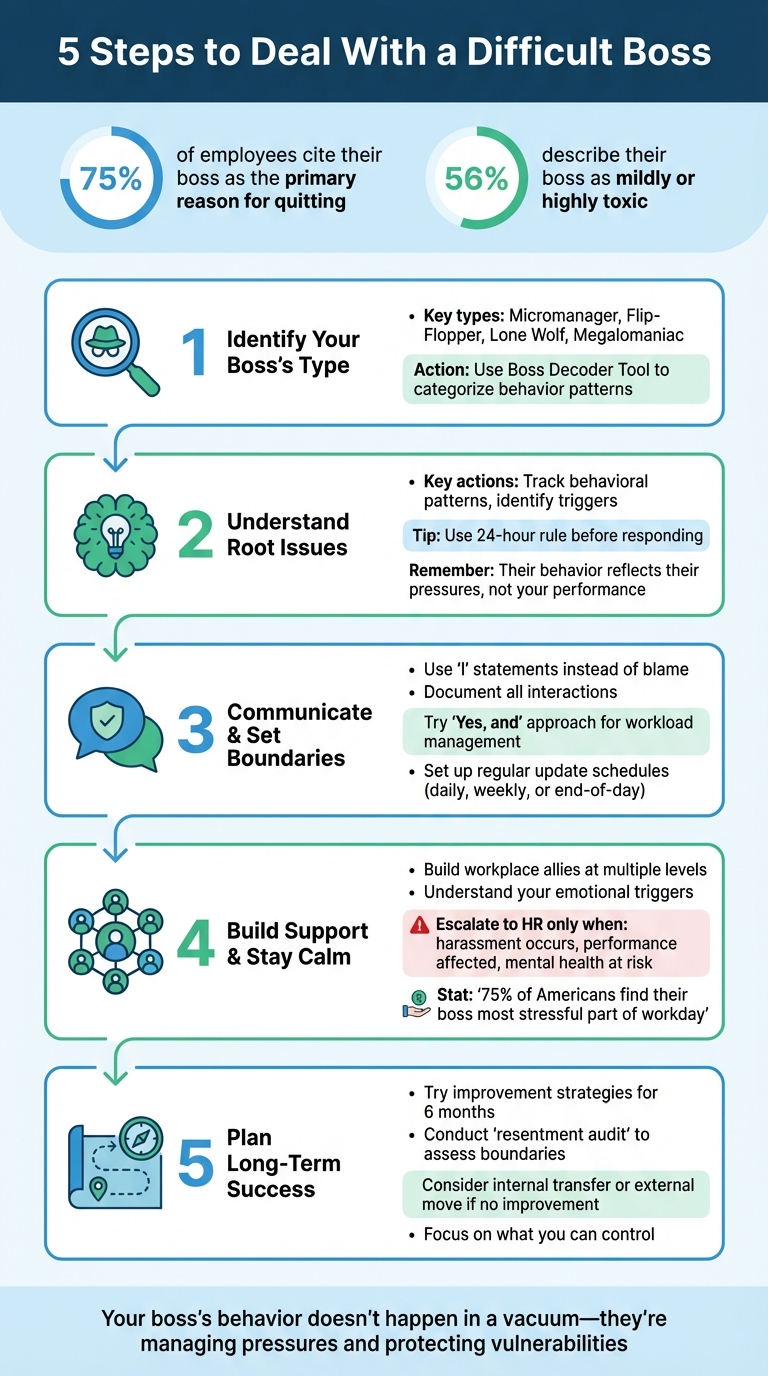
5-Step Process to Deal With a Difficult Boss - Infographic © MyDifficultBoss.com
How to Deal With a Difficult Boss: 4 Strategies for Survival and Success
Step 1: Identify Your Boss's Type and Behavior Patterns
Understanding the root of the problem is the first step to solving it. Before reacting to those frustrating last-minute requests or confusing emails, take a moment to assess your boss's behavior and personality. Ask yourself: Is this a clash of personalities or a difference in work styles? Pinpointing the issue allows you to respond thoughtfully rather than wasting energy on ineffective strategies. This foundational step sets the stage for crafting a more effective approach.
Common Types of Difficult Bosses
Not all difficult bosses are the same. Their behavior often reflects distinct patterns. For example:
- The Micromanager: Obsesses over every detail, driven by anxiety or fear of failure. They need constant reassurance that things won’t fall apart.
- The Flip-Flopper: Frequently changes priorities, leaving you scrambling to adapt to their indecision.
- The Lone Wolf: Operates independently, offering little guidance or mentorship.
- The Megalomaniac: Takes credit for successes but shifts blame to others, often masking deep insecurities.
Recognizing these tendencies helps you avoid internalizing their behavior. As Wendy Behary explains:
"Underneath all the bluster, boasting, bullying and controlling is someone who has a lot of insecurity and, ironically, a great sense of inadequacy that they are trying desperately to not expose".
By understanding these patterns, you can start to separate your own performance from your boss's insecurities, setting a healthier tone for your interactions.
Using the Boss Decoder Tool

The Boss Decoder Tool is a handy resource for figuring out your boss’s behavior. This quiz evaluates their communication style, decision-making habits, and triggers, categorizing them into archetypes like:
- The Commander: Direct and results-driven, they prefer data and efficiency over small talk.
- The Cheerleader: A big-picture thinker who craves validation and thrives on optimism.
- The Caretaker: Conflict-avoidant and nurturing, often hesitant to take a firm stance.
Once identified, the tool provides tailored conversation scripts and strategies for handling that specific personality. For instance, with a Commander, focus on facts and actionable plans. With a Cheerleader, highlight how your ideas align with their vision and use positive framing.
The tool is part of a larger resource library at MyDifficultBoss.com, which includes 135+ scenarios with starter scripts and strategies. Whether you’re dealing with a micromanaging boss, an overbearing workload, or general challenges, these resources ensure you’re never at a loss for how to respond.
For even more tips and specific strategies, check out scenarios like bosses who give too much work, micromanagement, or general difficulties. With these tools, you’ll be better equipped to refine your communication and handle challenges effectively.
Step 2: Understand and Manage the Root Issues
Now that you've identified your boss's type using tools like the Boss Decoder Tool, it's time to dig deeper and figure out what drives their actions. Keep in mind: your boss's behavior often reflects their own pressures and challenges - it’s not a direct critique of your skills or abilities. For example, if they constantly micromanage your work or change priorities on a whim, it’s usually more about their stress or leadership gaps than your competence.
Identify Behavioral Patterns
Start by observing and tracking consistent behaviors. Does your boss send frantic emails every Monday morning? Or maybe they give unclear feedback just as deadlines loom? Documenting these patterns can help you pinpoint the triggers and pressures behind their actions. Make sure to store your notes securely, like in a cloud-based system, to keep them private.
For instance, if you notice your boss frequently shifts focus after meetings with senior leaders, it’s likely they’re reacting to pressure from above. If they obsess over minor details, they might be driven by a fear of failure. Recognizing these patterns allows you to predict their responses and adjust your approach accordingly. The key is to understand the broader pressures fueling their behavior so you can respond more effectively.
Understand Your Boss's Pressures Without Taking Responsibility
Once you’ve identified recurring behaviors, take a step back to analyze the external pressures influencing your boss. Use tools like power mapping to figure out their challenges without letting their stress become your burden. Consider who they report to and what metrics they’re likely being judged on - whether it’s revenue goals, project milestones, team retention, or client satisfaction. When you understand their priorities, you can position your work as a way to help them succeed, rather than just another task on their plate.
That said, unprofessional behavior - like yelling during stressful times or taking credit for your work - is never okay. To protect your own mental health, practice emotional detachment. Treat their reactions as data points about their stress levels, not as personal attacks. For example, if your boss lashes out after a tough executive meeting, see it as a reflection of their own tension, not your performance.
The 24-hour rule can be incredibly helpful here. If you’re faced with an unreasonable demand or a heated interaction, give yourself a full day before responding. This pause helps you focus on addressing the actual issue rather than reacting emotionally, all while maintaining your peace of mind.
For more practical advice, check out conversation scripts for dealing with a micromanaging boss or handling excessive workloads.
Armed with these insights into behavioral triggers and pressures, you’ll be ready to move on to Step 3: communicating clearly and setting boundaries.
Step 3: Communicate Clearly and Set Boundaries
Understanding your boss's triggers is just the beginning. The next step is to communicate effectively and set clear boundaries. This approach helps tackle issues directly and can shift a strained relationship into one that's easier to navigate.
Use 'I' Statements and Document Interactions
When addressing concerns, focus on your perspective instead of assigning blame. For instance, rather than saying, "You never give me clear instructions", you could say, "I want to make sure I understand your priorities correctly - could we clarify the main deliverables for this project?" This keeps the conversation solution-oriented and avoids unnecessary tension.
It's also a good idea to document any changes in direction or conflicting instructions. This isn't about creating a record to hold against your boss but ensuring clarity for yourself. Having a reference point can be invaluable when memories or interpretations differ.
For bosses who micromanage or frequently check in, consider providing regular, neutral updates. Establishing a predictable schedule - whether daily, weekly, or at the end of the day - can reduce their need to hover. A response like, "Noted. I'll update you once completed", maintains professionalism while avoiding unnecessary conflict. Here's a quick guide to choosing the best update method:
| Update Method | Best For | Pros | Cons |
|---|---|---|---|
| Daily Morning Email | High-anxiety bosses | Sets expectations early; prevents hovering | Can feel repetitive for long tasks |
| Weekly Summary | Established trust | Focuses on big-picture goals/milestones | May not satisfy "real-time" needs |
| Project Management Tools | Remote/Hybrid teams | Offers passive visibility; reduces meetings | Requires consistent logging |
| End-of-Day Wrap-up | Fast-paced environments | Provides closure; eases overnight concerns | Can extend the workday |
For more tools, scripts, and strategies, visit MyDifficultBoss.com.
Manage Expectations and Protect Your Mental Health
If you're overwhelmed with work, avoid outright refusals. Instead, use the "Yes, and" approach: "Yes, I can take on Project X, and to do so, we'll need to postpone the Y deliverable until next week." Framing capacity limits as productivity concerns makes it easier for your boss to accept.
For ongoing overload, suggest a prioritization meeting. Bring a list of tasks and ask your boss to confirm or adjust priorities. This shifts the decision-making responsibility back to them while showing you're focused on delivering the most important results. If you're dealing with a micromanager, try a "pre-mortem" discussion before starting a project. Ask what three factors could lead to failure and address those concerns upfront. This can help reduce their need to oversee every detail.
Setting boundaries isn't about avoiding responsibility - it’s about ensuring you can deliver quality work. With manager engagement dropping from 30% to 27% in 2024, and disengaged employees costing the global economy around $438 billion in lost productivity, maintaining open communication and sustainable work habits benefits both you and your boss.
For more advice, including tailored conversation scripts, check out resources like dealing with a boss who gives too much work, handling a micromanaging boss, or working with a generally difficult boss.
These strategies pave the way for building support systems and staying calm under pressure, which will be explored in Step 4.
Step 4: Build Support and Stay Calm Under Pressure
Dealing with a difficult boss can feel isolating, but you don’t have to go through it alone. Building a network of allies - both inside and outside the workplace - can provide emotional support, practical advice, and help protect your professional reputation. These strategies complement earlier steps like setting boundaries and improving communication, creating a stronger foundation for navigating challenges.
Build Workplace Allies and Understand Your Triggers
Seek out allies at different levels within your organization. Colleagues who understand the workplace dynamics can help you determine whether your boss’s behavior is part of a larger pattern. Mentors, either within your company or externally, can offer a fresh perspective and guidance. Building relationships with your boss’s manager (also known as skip-level relationships) or with cross-functional teams can further ensure that your contributions are recognized beyond your immediate supervisor.
Equally important is understanding your emotional triggers. Pay attention to patterns in your boss’s behavior - like increased volatility after meetings with senior leadership - and adjust your interactions accordingly. Some experts recommend practicing "emotional aikido", where you separate the content of your boss’s feedback from their delivery. If a situation becomes especially heated, consider waiting 24 hours before responding to ensure your reply is calm and professional.
Statistics show that 75% of Americans find their boss to be the most stressful part of their workday, and 56% describe their boss as either mildly or highly toxic. Connecting with others who understand your challenges can help you maintain perspective and provide much-needed support. However, there are times when building support isn’t enough, and escalating the issue becomes necessary to protect your well-being.
When to Escalate Issues
Deciding to involve Human Resources (HR) requires careful consideration. If your boss’s behavior crosses into harassment, discrimination, or abuse - or if your own efforts to address the situation haven’t worked and it’s affecting your performance or mental health - it may be time to take action. Before approaching HR, document everything thoroughly. Use a personal device or cloud storage to record dates, specific incidents, direct quotes, and the names of any witnesses.
"The time to start a paper trail is before you think you need one."
– Rachel Moreno, Coach, Planning in High Heels
When speaking with HR, approach the conversation as a request for guidance rather than an immediate formal complaint. Focus on how your boss’s behavior impacts your work and the organization’s goals, rather than framing it solely as a personal issue. Ask about protections against retaliation and be aware that HR may not be able to guarantee complete confidentiality due to their responsibilities within the company.
If you’re unsure about escalating the issue, consulting a career coach can be a helpful step. They can assist you in creating a strategic plan, whether that means improving the current situation or finding a new role - perhaps in a different department or organization - where you can thrive.
Step 5: Plan for Long-Term Success
See Infographic: Long-Term Success Strategies
Once you've built support and maintained composure under pressure, it's time to think beyond the immediate challenges. Managing a difficult boss isn't just about getting through the next meeting - it's about creating a sustainable plan for your career. Whether that involves improving your current relationship or deciding when it's time to move on, planning for the future safeguards both your professional growth and personal well-being.
Build a Better Relationship Over Time
Even tough relationships with a boss can improve with consistent effort. Start by figuring out how your boss prefers to communicate. Some managers appreciate quick, concise updates, while others want detailed explanations or visual aids. By aligning with their preferred communication style, you can turn a disengaged manager into someone more responsive.
Take the initiative to become a problem-solver. When presenting issues, offer three potential solutions and recommend the best one. This approach shifts the focus from assigning blame to working collaboratively and shows that you're there to make their job easier. If your boss is prone to micromanaging, try strategic overcommunication - send proactive updates labeled as "Completed", "In Progress", or "Upcoming" before they even ask. This can reduce their need to micromanage by keeping them informed.
Figure out what your boss values most - whether it's meeting deadlines, creativity, or precision. Then, consistently deliver in those areas to build trust. Regularly scheduled one-on-one meetings can also help. These structured interactions often feel less tense than impromptu conversations, especially with unpredictable managers.
"Your boss's behavior doesn't happen in a vacuum. They're performing for someone, managing some pressure, protecting some vulnerability." – Rachel Moreno, Executive Coach
Stick with these strategies for about six months. If you don't notice any improvement, it might be time to think about other options. For more detailed advice, including scripts and strategies tailored to specific types of difficult bosses - like those who micromanage, overload you with tasks, or are generally hard to deal with - check out MyDifficultBoss.com.
Know When It's Time to Move On
While small, steady improvements can make a big difference, sometimes the stress of a difficult boss becomes too much. Not every situation can - or should - be fixed. If your health is declining, your career growth has stalled, or the workplace feels ethically problematic, it may be time to explore other opportunities.
Before making a final decision, try a "resentment audit". Reflect on the moments that have caused frustration or anger and identify which boundaries - whether mental, emotional, or related to your role - are being crossed. If you enjoy the company but not your boss, look into internal transfer options. Switching departments is often quicker and less disruptive than leaving the organization entirely.
When you decide to move on, handle the transition professionally. Provide proper notice, and avoid speaking negatively about your boss during interviews. Instead, focus on your desire for a more supportive work environment. Until your last day, keep documenting key communications and decisions to protect your professional reputation.
Conclusion
Managing a challenging boss doesn’t have to feel like an uphill battle. By recognizing behavior patterns, understanding workplace dynamics, setting boundaries, and planning for long-term success, you can take control of your workday. These strategies provide a clear path to navigate the difficulties and turn them into opportunities for growth.
It’s important to remember that your boss’s behavior often reflects their own struggles, not your value as a professional. By focusing on what you can control and depersonalizing the conflict, you shift from feeling powerless to actively problem-solving. Whether it’s using the 24-hour rule before responding to criticism, setting up proactive update schedules, or framing boundaries with "I" statements, these tools help you transform a toxic situation into a chance to grow. As Liz Colodny, Senior Associate Director at Cornell SC Johnson College of Business, says:
"Navigating the situation provides an opportunity to develop critical interpersonal and leadership skills that will serve you well".
To make this process easier, tools like the Boss Decoder Tool at MyDifficultBoss.com can help you identify your boss’s behavior patterns and provide tailored conversation scripts to address specific issues. The site also offers a library of over 135 scenarios, complete with step-by-step solutions and response strategies, to guide you through even the most difficult workplace challenges.
Start small - try one strategy this week. Document an interaction, send a proactive update, or set a boundary using an "I" statement. These simple steps can shift the dynamic and help you regain control over your work environment.
Your career deserves a space where you can thrive. Whether you’re working to improve your current situation or preparing for your next move, you now have the strategies and resources to succeed.
FAQs
How do I tell if my boss is toxic or just stressed?
To figure out whether your boss is toxic or simply stressed, pay close attention to how they act. Toxic bosses tend to exhibit behaviors like unpredictability, belittling remarks, or outright disrespect. On the other hand, a stressed boss might appear withdrawn, obsess over minor details, or shy away from difficult discussions. Recognizing these patterns can help you decide how to handle the situation. For more personalized advice and tools, check out resources available at My Difficult Boss as mentioned above.
What should I document about my boss (and where do I keep it)?
Documenting your boss’s behavior is crucial if you’re dealing with challenges like micromanagement, unrealistic demands, or inappropriate conduct. Be as specific as possible - include dates, times, and detailed descriptions of incidents. For example, if your boss frequently changes project deadlines without notice, note the exact dates this happened and how it impacted your work.
Additionally, keep written records of agreements, instructions, or conversations about boundaries. Emails, meeting notes, or even summaries of verbal discussions can serve as valuable proof of what was said or agreed upon.
Make sure to store this documentation securely, whether in a digital folder or a password-protected notebook. Having organized and accessible records can help you address issues more effectively, especially if they escalate or require external support.
How do I know when to go to HR versus look for a new job?
If your boss's actions include harassment, unethical conduct, or breaking company policies, it's crucial to report these issues to HR. For challenges that don't involve violations - like personality conflicts or micromanagement - consider approaches such as setting clear boundaries or using resources like the Boss Decoder Tool to navigate the situation. However, if the environment stays toxic or starts affecting your well-being despite your efforts, it might be worth thinking about pursuing new job opportunities.