Q&A: Managing Stress from Difficult Bosses
Practical strategies to reduce stress from a difficult boss: calming techniques, boundary-setting, resilience, documentation.

Dealing with a tough boss can feel overwhelming, but there are practical ways to manage stress and improve your situation. Whether it's micromanagement, unclear priorities, or blurred work-life boundaries, the key is to recognize these behaviors early and respond effectively. Here's a quick breakdown of what works:
- Immediate Techniques: Stay calm with grounding exercises, use "I" statements to communicate concerns, and decompress with simple rituals like walks or breaks.
- Setting Boundaries: Define clear limits around your time, focus, and responsibilities. Use strategies like the "Yes, and" approach to handle extra tasks without overcommitting.
- Long-Term Resilience: Prioritize sleep, exercise, and nutrition. Reflect on stress patterns and consider professional support if needed.
- Improving Boss Relationships: Prepare for productive conversations by documenting specific issues and proposing solutions using the COIN model.
If things escalate, document incidents carefully and consider HR or legal steps if necessary. Tools like MyDifficultBoss.com offer helpful resources, including scripts and a "Boss Decoder" to tailor strategies to your manager's style. By combining these approaches, you can reduce stress and regain control of your work experience.
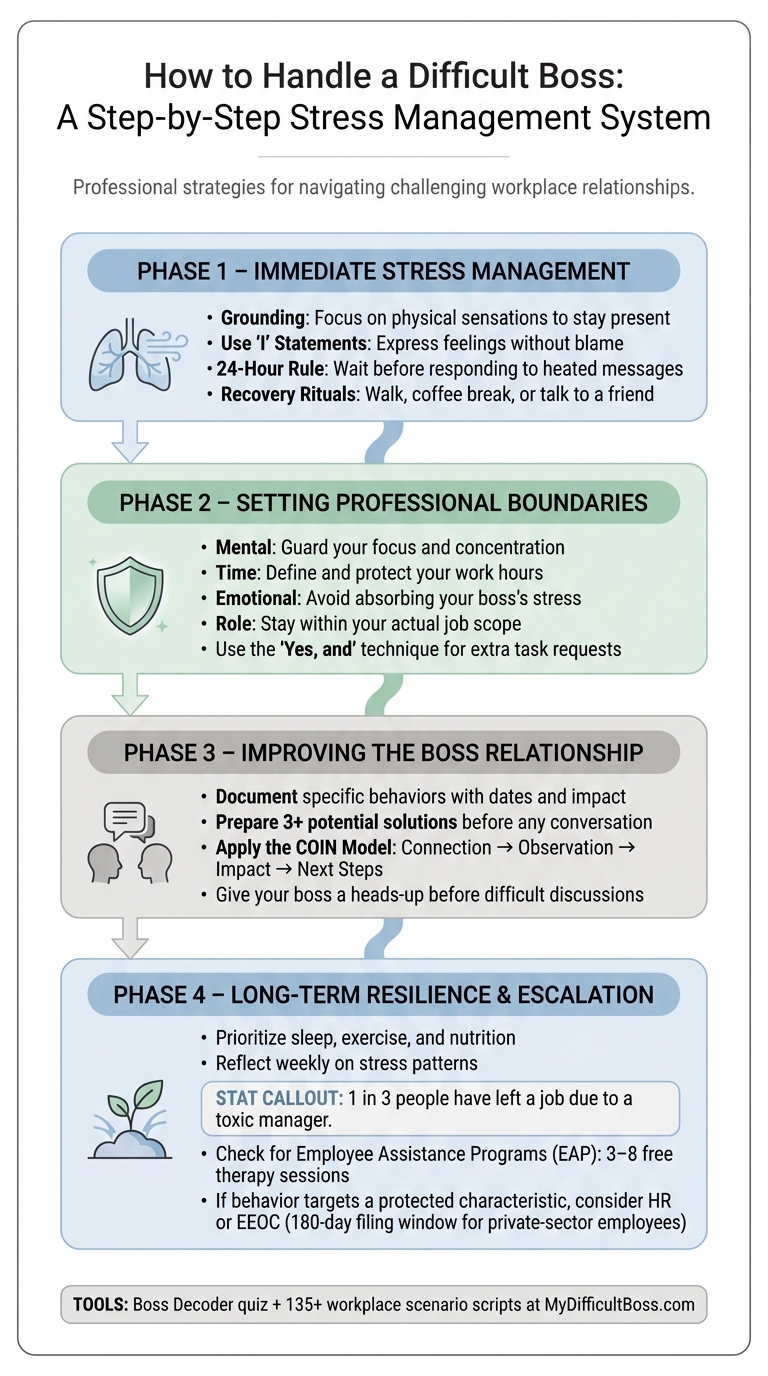
How to Handle a Difficult Boss: A Step-by-Step Stress Management System - Infographic © MyDifficultBoss.com
Managing Stress and Anxiety at Work Tools for Coping with a Toxic Boss
sbb-itb-1bb7cb4
Immediate Stress Management Techniques
Recognizing a difficult boss is one thing; handling tense moments in real time is another. These quick strategies can help you navigate stressful interactions and manage the aftermath effectively. The best part? They’re simple but impactful.
Staying Calm During Stressful Interactions
When stress hits, take a moment to pause. That brief break between the trigger and your response is where you regain control. As Annabelle Psychology explains:
"The same situation can feel stressful to one person and manageable to another."
Ground yourself by focusing on physical sensations - feel your feet on the floor, the support of your chair, or the details of your surroundings. This keeps your mind from spiraling and anchors you in the present. If you notice physical tension, like a tight chest or clenched jaw, consciously relax your shoulders to ease the strain.
When it’s time to speak, "I" statements can help. For instance, instead of saying, "You’re always changing priorities at the last minute," try, "I feel overwhelmed when priorities shift unexpectedly." This approach shares how you feel without sounding accusatory, which can keep the conversation from escalating.
Once you’ve managed the interaction, it’s just as important to focus on decompressing afterward.
How to Decompress After a Stressful Interaction
Even after the interaction ends, your body may still carry the stress. Stress affects the body, but so does relief. A quick walk, grabbing a coffee, or reaching out to a trusted friend can help you reset and regain balance.
If the stress stems from an email or message, try the 24-hour rule: wait a full day before responding. This gives you time to cool down and craft a reply that’s calm, clear, and professional. When you’re ready to revisit the situation, shift your perspective - think, "This feedback is about the project, not a personal attack." This mental reframing can make it easier to process criticism constructively.
| Technique | Best Used When... |
|---|---|
| Grounding | You feel anxiety building during a meeting |
| "I" Statements | You need to express concerns without escalating tension |
| 24-Hour Rule | You receive a heated email or unreasonable request |
| Recovery Rituals | You need to unwind immediately after a tough interaction |
Building Long-Term Resilience
Quick fixes can help in the moment, but building resilience that lasts requires a deeper approach. The strategies outlined here are about creating a solid foundation that can withstand even the toughest days with a challenging boss.
Setting Professional Boundaries
Boundaries aren't about being uncooperative - they're about staying effective. These can be broken into four main areas: mental (guarding your focus), time (clarifying your work hours), emotional (avoiding the absorption of your boss’s stress), and role (sticking to your job’s actual scope).
How you communicate boundaries is key. Framing them as productivity needs, rather than personal preferences, makes them easier to accept. For instance, say: "To give this project my full attention, I need to minimize interruptions in the mornings." That’s much harder to dismiss than saying: "I don’t want to be disturbed."
When extra work is thrown your way, a flat-out "no" can backfire. Instead, try the "Yes, and" technique: "Yes, I can handle Project X, and to make that happen, Project Y will need to be postponed until next week." This approach keeps you cooperative while making trade-offs clear. For bosses who micromanage, proactive updates - such as a brief, regular summary of what’s done, what’s in progress, and what’s next - can reduce their need to hover.
A practical tip: after any verbal agreement about tasks or priorities, follow up with a short email summarizing the discussion. This creates a shared record and holds both sides accountable. The key is consistency - enforcing boundaries regularly helps make them part of your routine.
Lifestyle Changes That Help Reduce Stress
What you do outside of work has a big impact on how you handle stress at work. Sleep, exercise, and good nutrition are the cornerstones of resilience. For example, chronic lack of sleep makes it much harder to manage emotions, which can make a tough boss feel even tougher when you’re running on fumes.
Small, consistent recovery habits can also make a difference. Taking a short walk after a stressful meeting, stepping away from your desk for lunch, or chatting with a trusted friend can help reset your nervous system. These don’t need to take much time - what matters most is that they’re done regularly.
It’s also useful to reflect on your week and pinpoint the moments that left you feeling particularly frustrated or drained. Often, these patterns reveal where boundaries are being crossed, giving you specific areas to address. And when lifestyle tweaks aren’t enough, it may be time to consider professional help.
When to Seek Professional Support
If your situation feels more toxic than a simple personality clash, professional support might be the next step. Research shows that 1 in 3 people have left a job due to a toxic workplace or a bad manager. You’re not alone, and it’s important to remember - it’s not your fault.
In the U.S., start by checking if your employer offers an Employee Assistance Program (EAP). Many mid-to-large companies do, and these programs often provide free, confidential access to therapists or counselors - typically covering 3 to 8 sessions at no cost. If your company doesn’t have one, check your health insurance plan for mental health coverage. Most plans include access to professionals, and the provider directory is a good place to start.
Before involving HR, it can also be helpful to seek advice from a mentor or someone outside your direct chain of command. They can provide perspective and help you navigate the next steps.
Improving Your Relationship with Your Boss
Managing work stress isn’t just about setting boundaries or decompressing after hours - it’s also about building a stronger relationship with your boss. Clear communication can transform the dynamic, creating a more manageable and productive work environment. A direct, thoughtful conversation can often address issues more effectively than simply venting or coping on your own.
How to Prepare for a Productive Conversation
One of the most common pitfalls is walking into a conversation unprepared. Instead of relying on vague grievances, take the time to document specific behaviors that cause stress. Note the dates and how these actions impact your work. This shifts the focus from general complaints to concrete examples, making your concerns easier to address.
Come prepared with at least three potential solutions for the problems you’re raising. Framing the discussion around solutions signals to your boss that you’re not just presenting a problem - you’re actively looking to collaborate on resolving it.
A helpful approach is the COIN model:
- Connection: Start by establishing a positive tone.
- Observation: Clearly state what happened without assigning blame.
- Impact: Explain how the issue affects your work or productivity.
- Next Steps: Propose a practical solution.
For instance, instead of saying, "I’m frustrated by last-minute changes," you could say, "I’ve noticed that new priorities often come in late in the day, which disrupts my workflow. Could we set up a daily check-in to address priorities earlier?"
It’s also a good idea to give your boss a heads-up before the conversation. A simple statement like, "I’d like to discuss something during our next one-on-one," can prevent surprises and make them more receptive. If you’re unsure how to express your concerns, focus on how the issue affects productivity. For example, say, "To meet this deadline, I need uninterrupted mornings," rather than, "I feel overwhelmed."
If these efforts don’t lead to improvements, it may be time to consider involving HR.
When and How to Involve HR
Not every challenging boss situation warrants HR involvement. If your boss is overly demanding or micromanages everyone equally, it’s likely a professional issue rather than something HR can formally address. However, if their behavior targets a protected characteristic - like race, gender, age, or disability - it could qualify as a hostile work environment.
When escalation becomes necessary, how you document the situation is critical. Always record incidents on personal devices or cloud storage - not on company hardware. Include key details such as dates, times, and any witness statements.
When you approach HR, frame the conversation as a "request for guidance" rather than an immediate complaint. This collaborative tone can encourage HR to help you navigate the situation without jumping straight into a formal investigation. Keep in mind, though, that HR cannot always guarantee confidentiality, especially if the issue involves potential legal liability for the company.
If you’re considering filing a formal complaint with the Equal Employment Opportunity Commission (EEOC), timing is crucial. Private-sector employees generally have 180 days to file a charge, while federal employees must contact an EEO counselor within 45 days. Using your employer’s internal complaint process first isn’t just a good practice - it’s often a required step. Skipping this step could limit your legal options later.
Tools and Resources for Managing Stress
Dealing with a difficult boss becomes a lot more manageable when you have the right tools and strategies. These resources help you shift from feeling reactive and overwhelmed to handling situations with confidence and purpose.
How MyDifficultBoss.com Can Help

MyDifficultBoss.com is a resource specifically crafted for professionals navigating the challenges of working with tough managers. One standout feature is the Boss Decoder Tool - a diagnostic quiz that analyzes your boss’s communication style, decision-making patterns, and common triggers. By identifying their "type", you can stop guessing and start tailoring your approach to fit their personality.
Another helpful feature is the scenario library, which contains over 135 workplace situations. Whether you're dealing with micromanagement, unrealistic workloads, or erratic behavior, this library provides starter scripts and step-by-step strategies to address these issues. These scripts give you a clear starting point to handle tough conversations. Additionally, the site offers a free Toxic Manager Survival Checklist, which delivers personalized advice to safeguard your mental health and career when dealing with high-conflict bosses.
Building Your Own Stress Management Plan
While tools like these are invaluable, creating a personal stress management plan is just as important. Your plan should combine internal coping techniques, effective communication strategies, and consistent documentation habits into a routine you can rely on.
For communication, using "I" statements can help you express your concerns without triggering defensiveness. If micromanagement is a problem, strategic overcommunication - sending proactive updates like "Completed" or "In Progress" reports - can keep your boss informed and reduce unnecessary hovering. When your workload becomes overwhelming, the "Yes, and" approach is a great way to shift prioritization back to your boss. For example, agree to take on a task but ask which current priority should be delayed, leaving the decision in their hands.
Documentation is a critical part of any stress management strategy. Maintain a private, cloud-based log where you record dates, specific incidents, and direct quotes. This not only protects your professional reputation but also provides concrete evidence if you ever need to escalate the issue. Pair this with a consistent update schedule tailored to your boss's needs. For high-anxiety managers, daily morning updates may help ease tensions, while a weekly summary might work better once trust has been established.
Conclusion
Dealing with stress from a challenging boss takes patience, but the right strategies can make a noticeable difference. The techniques shared here work best as a system: staying present, setting firm boundaries, and gradually shifting the work dynamic.
Here’s a quick recap: the 24-hour rule helps you avoid impulsive reactions during tense moments, while the "Yes, and" approach keeps interactions professional and constructive. Keeping a detailed log of incidents, dates, and key events can quietly protect your career until it’s time to address the issue directly. Together, these steps create a practical plan for navigating workplace stress.
- For more tools and guidance, check out MyDifficultBoss.com. Their Boss Decoder tool helps you understand your manager’s style, so you can focus on strategies that fit your situation. Plus, they offer access to over 135 workplace scenarios and ready-made scripts to help you handle tough situations effectively.
FAQs
How do I set boundaries without seeming difficult?
To establish boundaries without coming across as uncooperative, it’s important to approach the conversation with a calm and cooperative tone. Be clear about your limits - whether it’s your availability or workload - and communicate them respectfully and specifically. For example, you might say, “I need to disconnect after 7 p.m. to ensure I can stay productive during the day.”
When framing your boundaries, focus on how they can benefit everyone involved. Suggest practical solutions, such as scheduling regular check-ins, to address concerns proactively. Additionally, documenting any agreements can help avoid misunderstandings and ensure everyone is on the same page.
Finally, consistency is key. Following through on the boundaries you set helps reinforce them while maintaining a positive and professional relationship.
What should I document, and where should I store it?
Documenting your boss's behavior, agreements, and instructions can be crucial, especially when addressing workplace challenges. Keep detailed notes of incidents, including dates, times, and specific descriptions - like sudden deadline changes or inappropriate comments. Make sure to store these records securely, whether in a password-protected digital folder or a private notebook.
To strengthen your documentation, follow up on verbal agreements with written confirmations or emails summarizing the discussion. This creates a clear paper trail and helps ensure accountability. Staying organized gives you quick access to these records if concerns need to be addressed or escalated later.
When should I involve HR or seek legal help?
If your attempts to set boundaries don’t work or if the behavior escalates into creating a hostile work environment, it’s time to involve HR. In cases where actions target your protected status or involve discrimination or harassment, legal assistance might also be necessary. Make sure to document every incident thoroughly and familiarize yourself with your rights - this will help you handle the situation more effectively.