How To Stay Positive In A Toxic Workplace
Practical strategies to protect your mental health, set boundaries, build resilience, and plan an exit from a toxic workplace.

Navigating a toxic workplace is tough, but staying positive is crucial for your mental health and career. Toxic environments can lead to stress, anxiety, and even long-term health issues, while also impacting your earning potential and job satisfaction. Here's what you need to know:
- Identify toxicity: Watch for signs like public humiliation, gaslighting, high turnover rates, or hostility among coworkers. Use tools like the Boss Decoder Tool to identify your boss’s specific work style.
- Protect your mental health: Use techniques like Cognitive Behavioral Therapy (CBT), affirmations, and gratitude to manage stress and negative emotions.
- Set boundaries: Learn to say "no" to unreasonable demands and limit exposure to workplace drama.
- Build resilience: Take regular breaks, reframe challenges, and channel energy into hobbies or physical activities.
- Find support: Connect with allies at work and strengthen relationships outside of work.
- Use tools and resources: Leverage platforms like MyDifficultBoss.com to explore tailored solutions and scripts to manage your boss interactions effectively.
- Know when to leave: If toxicity becomes unsustainable, plan your exit carefully and focus on finding a healthier environment.
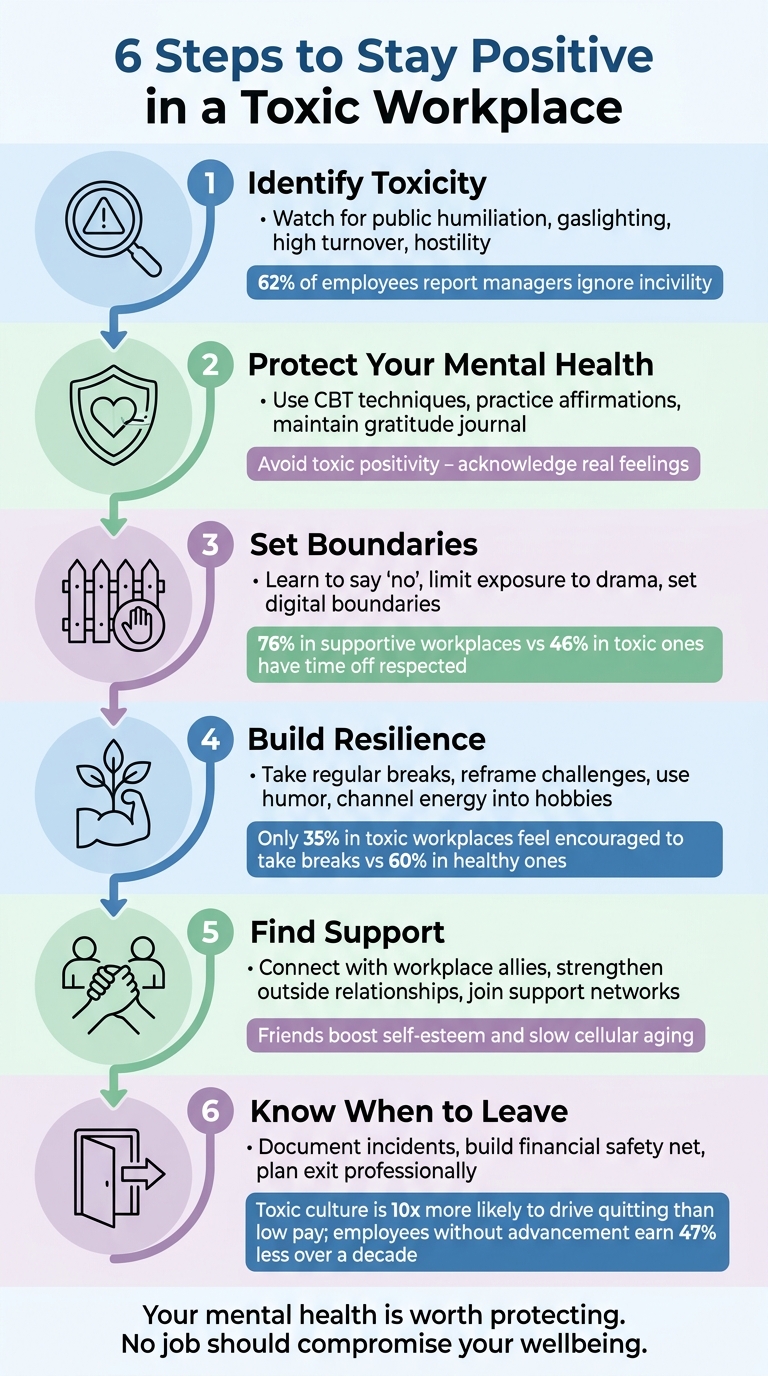
6 Steps to Stay Positive in a Toxic Workplace - - Infographic © MyDifficultBoss.com
How to Identify a Toxic Workplace
Warning Signs of a Toxic Workplace
Spotting a toxic workplace often starts with paying attention to your gut feelings. If you find yourself feeling physically unwell - like experiencing nausea before heading to work, tense muscles during meetings, or sleepless nights - it could be an early sign that something’s wrong. Toxic behaviors tend to follow certain patterns. For example, abusive supervision might look like public humiliation, micromanaging, or setting unreasonable demands, such as unpaid overtime. Hostility among coworkers can take the form of bullying, gaslighting (making you doubt your own perception), or undermining your contributions, like dismissing your ideas in meetings. Other behaviors, such as spreading rumors, sending passive-aggressive emails, or making explicit threats, also point to a toxic environment.
Cultural red flags are another indicator. A high turnover rate often signals dissatisfaction, and a scarcity mindset - where no effort ever seems enough - creates unnecessary pressure. Alarmingly, 62% of employees report that managers ignore acts of incivility, which only reinforces dysfunction. A lack of psychological safety is another major issue. If you fear retaliation for speaking up or feel isolated after raising concerns, these are clear signs of a toxic workplace.
These individual and cultural behaviors often reflect deeper systemic issues, where poor leadership and organizational practices amplify the toxicity.
How Leadership and Culture Create Toxicity
Leadership decisions heavily influence whether a workplace becomes toxic. The way leaders handle situations often sets the tone for the entire organization.
When managers focus on assigning blame instead of solving problems, employees may feel defensive and avoid taking risks, which stifles creativity and open communication. A lack of transparency - such as making decisions without explanation - leads to anxiety, rumors, and mistrust. Inconsistent accountability is another major factor; when high performers or long-term employees are allowed to bully others without consequences because of their perceived value, it sends the message that results are prioritized over respect. Rachel Richardson, Head of Growth & Marketing at Grove HR, puts it succinctly:
"A toxic workplace is one where harmful behaviours - gossip, blame, bullying, exclusion, or fear of speaking up - have become normalised to the point where they damage employee wellbeing, productivity, and retention".
Workplaces that glorify an "always on" mentality, where skipping breaks is seen as dedication, often push employees toward burnout. Additionally, when communication relies on gossip or back channels instead of formal processes, it shows a breakdown in professional standards. It’s no surprise that toxic cultures are 10 times more likely to drive employees to quit than issues like low pay.
sbb-itb-1bb7cb4
How to Stay Positive When Your Job is Toxic
How to Respond Instead of React
Not every situation demands an immediate reaction. Taking a moment to pause and respond thoughtfully can help you navigate challenging environments with less emotional strain.
Apply Cognitive Behavioral Therapy (CBT) Techniques
Cognitive Behavioral Therapy (CBT) provides practical tools to help manage negative thought patterns before they escalate into stress or anxiety. For example, you can challenge distorted thoughts by asking yourself if they’re based on facts or assumptions. If you find yourself doubting your abilities, reflect on past successes or feedback that contradicts those doubts. Techniques like decatastrophizing - where you follow a "what if" scenario to its logical conclusion - can help you see that even the worst-case outcome is often manageable. Keeping a thought record to track recurring negative patterns can also be helpful.
Dr. Susan David, a psychologist at Harvard Medical School, emphasizes the value of emotional agility. She suggests labeling your emotions with phrases like, "I am feeling stressed", rather than "I am stressed." This subtle shift creates some distance between you and the emotion, making it easier to process and manage.
It’s equally important to approach your emotions authentically and avoid falling into the trap of forced positivity.
Avoid Toxic Positivity
Staying optimistic doesn’t mean ignoring reality. Toxic positivity - where people insist on staying positive while suppressing negative emotions - can do more harm than good. It often prioritizes the comfort of others over your own reality. Dr. Susan David highlights this by saying:
"When we tell people just to be positive, what we are actually saying to them is my comfort is more important than your reality."
Research backs this up, showing that suppressing emotions can lead to physical stress responses, like an elevated heart rate during tense situations. Healthy optimism, on the other hand, acknowledges challenges while maintaining confidence in your ability to handle them. For instance, you might say, "This environment is really challenging right now, but I’m capable of finding a way through it - whether that means setting boundaries, finding allies, or planning an exit".
Optimists tend to see setbacks as temporary and specific rather than permanent or overwhelming. If someone dismisses your concerns with empty platitudes like, "Just be grateful you have a job", you can gently affirm your feelings by saying, "If I’m feeling this way, there’s probably a valid reason for it".
Use Tools Like MyDifficultBoss.com
When cognitive strategies and optimism aren’t enough, specialized tools can provide additional support. For example, a website called MyDifficultBoss.com offers a Boss Decoder Tool that helps you identify different types of difficult bosses and provides tailored strategies for managing them. Whether you’re dealing with a micromanager, a credit-stealer, or a boss who hides unrealistic expectations behind excessive praise, the My Difficult Boss platform offers over 135 scenarios with step-by-step solutions, starter scripts, and long-term strategies.
If your boss reframes legitimate concerns as "attitude problems" - a common sign of toxic positivity - the site suggests reframing your concerns as risk management. Instead of saying, "This deadline is unrealistic", you could try, "I want to flag a risk to the timeline - here are three options for addressing it".
The free version of the platform gives you access to 11 common boss challenges, complete with starter scripts and expert advice. Additional features, like the "Get a Raise" toolkit and interactive roleplay sessions, are also in development. This resource complements CBT techniques and optimism strategies, helping you approach workplace challenges with a more strategic mindset. By focusing on thoughtful responses rather than knee-jerk reactions, you can regain a sense of control without ignoring the realities of a toxic work environment.
Daily Habits That Build Emotional Resilience
Everyday habits play a quiet but powerful role in helping you handle workplace toxicity. By practicing small, consistent actions, you can strengthen your ability to manage stress and negativity. Much like cognitive behavioral therapy (CBT), these habits help you break out of negative thought patterns and develop a more proactive mindset.
Start Your Day with Affirmations and Gratitude
Mornings set the tone for your day, and a steady routine can help stabilize your emotions and ease anxiety. Affirmations are a simple yet impactful way to shift your mindset. These positive statements counteract negative self-talk and protect you from internalizing workplace criticism. As Aastha Raj from The Economic Times puts it:
"Affirmations, simple yet intentional positive statements, can serve as a powerful tool to rebuild self-belief and maintain emotional balance".
Rather than relying on generic affirmations, make them personal and specific to your challenges. For example, try saying, "I remain calm and focused under pressure" or "Others' opinions do not define my worth." Repeating these affirmations in front of a mirror or recording them for quick access can amplify their impact. And remember, as Raj emphasizes:
"Consistency is key when using affirmations effectively".
Pairing affirmations with gratitude practices can deepen their effect. A gratitude journal, where you jot down specific things you’re thankful for each day, helps shift your attention from stressors to the positives in your life. You can enhance this practice by adding a short meditation, some focused breathing, or even a brisk walk. Even small actions, like listening to an uplifting playlist while getting ready, can energize your morning.
Use Humor and Reframe Negative Situations
Humor is a powerful stress reliever. It lightens your mood, reduces tension, and helps you break free from unproductive thought patterns like overthinking or cynicism. By shifting your perspective, humor can also move your nervous system out of "threat-response mode", making it easier to think collaboratively and constructively.
Reframing is another effective tool for managing stress. When you face a daunting task, for instance, replace "I'll never get this done" with "I need to break this into smaller, manageable steps". Reframing doesn’t mean ignoring challenges - it’s about acknowledging them while focusing on actionable solutions. Unlike toxic positivity, which dismisses negative feelings, reframing allows for emotional honesty while encouraging a constructive outlook.
Here’s how reframing can work in the workplace:
| Instead of Saying... | Try This Reframe... | Why It Works |
|---|---|---|
| "I'll never get this done." | "I need to break this down into smaller steps." | Shifts focus from feeling stuck to action |
| "This is a disaster." | "I want to flag a risk to the project timeline." | Frames the issue as a solvable problem |
| "It could be worse." | "I see how this is affecting you." | Offers emotional validation |
When dealing with difficult coworkers, remind yourself that their behavior might stem from personal struggles rather than incompetence. This perspective can help you approach conflicts with empathy and patience.
Take Short Breaks to Recharge
Short breaks are not just nice-to-haves - they’re crucial for maintaining resilience. Unfortunately, only 35% of workers in low-psychological-safety environments feel encouraged to take breaks, compared to 60% in healthier workplaces.
Taking time away from your desk can work wonders. Use your lunch break to step outside, if possible, and spend a few minutes in nature to clear your mind. If heading outdoors isn’t an option, find a quiet space to practice focused breathing, listen to calming music, or try a walking meditation. These small actions can help reset your mood and boost creativity.
Another way to create a positive environment is by personalizing your workspace. Surround yourself with items that bring you joy, like photos, plants, or small keepsakes. These subtle touches can act as a "positivity bubble", helping you stay grounded throughout the day.
Finally, establish a "shut down" ritual at the end of each workday. Whether it’s a hot shower, a short meditation, or a brisk walk, having a routine to transition from work to personal time can help you leave workplace stress behind. Think of breaks not as time lost but as tools to recharge your productivity.
How to Set and Maintain Emotional Boundaries
Establishing boundaries is essential for protecting your mental well-being and conserving energy, especially in a toxic workplace. Without them, you might find yourself drained, overwhelmed, or losing focus on your professional priorities.
Start by identifying behaviors that violate your boundaries. Pay attention to physical or emotional cues like tension, resentment, or fatigue. Sometimes, toxic workplace dynamics can echo unresolved patterns from the past (a concept known as transference). Recognizing these patterns can help you shift from reacting emotionally to responding with professionalism. Once you're clear on your boundaries, the next step is learning how to enforce them.
How to Say 'No' Without Conflict
Declining unreasonable demands doesn't have to lead to confrontation. Instead of assigning blame with statements like, "You always interrupt me", try framing it neutrally: "I feel unheard when interrupted. Let’s take turns speaking so everyone gets a chance to contribute."
If you're asked to skip breaks or work unpaid overtime, calmly explain why these breaks are essential for your productivity. For example, you could say, "I need my breaks and scheduled time off to recharge so I can perform at my best." When others persist in crossing your boundaries, it’s important to set consequences. As business coach Erden Tuzunkan puts it:
"If you continue to make disrespectful comments about my work, I will have no choice but to report this behavior to our supervisor. We need to maintain a professional and respectful work environment".
Such clear, firm responses help safeguard your boundaries and ensure your energy is spent on what truly matters.
Limit Exposure to Negative Influences
Workplace gossip and drama rarely offer any benefit. Choose to step away from these situations to protect your emotional well-being. Keep interactions with toxic colleagues strictly professional, avoiding personal discussions. Take breaks away from your desk - step outside, find a quiet corner, or leave the building to reset your mindset. To further protect your personal time, set digital boundaries by refraining from checking work emails outside of designated hours.
If you must have a difficult conversation, suggest meeting in a neutral setting to minimize tension. Interestingly, employees in supportive workplaces are much more likely to have their time off respected - 76% compared to just 46% in toxic environments. Prioritizing your personal time isn’t selfish; it’s a necessary step for maintaining balance.
Focus Your Energy on What Matters
Channel your energy into tasks that align with your goals and values. Expand your support network by connecting with colleagues, managers, and mentors - whether through in-person meetings or virtual coffee chats. These connections can provide encouragement and help dilute negative experiences. At the end of each workday, establish a routine - like a hot shower, a walk in nature, or a call with a friend - to help release lingering stress.
Build a Support System Inside and Outside Work
Once you've established emotional boundaries, the next step is creating a reliable support network. Dealing with workplace toxicity is tough, and no one should face it alone. A strong support system - both at work and in your personal life - can help you stay grounded and resilient. A March 2026 Psychology Today study highlights that having friends not only slows cellular aging but also boosts self-esteem, even in the face of workplace bullying.
Find Workplace Allies
In a toxic work environment, having allies can make a world of difference. They help reduce feelings of isolation and give you the confidence to tackle challenges head-on. Start by broadening your network - schedule virtual coffee chats or collaborate on cross-department projects to connect with colleagues outside your immediate team. Even just one trusted friend at work can help you stay focused and provide much-needed perspective as you navigate difficult situations.
Workplace allies can validate your experiences and counteract the effects of gaslighting. However, choose your confidants wisely - steer clear of coworkers with aggressive or narcissistic tendencies. As MIT Sloan Professor Deborah Ancona explains:
"Toxic leaders are often talking about all the great things that they can do. People are attracted to that... Only later do you start to see the underbelly that isn't always visible at first glance".
Strengthen Relationships Outside Work
Your personal relationships play a crucial role in keeping you emotionally balanced. Friends and family outside of work provide a reality check, helping you separate workplace drama from your self-worth. Stay connected by setting reminders for birthdays or special occasions, and use spare moments like your commute to call loved ones. You can also plan shared activities - whether it’s training for a race, hosting a themed dinner, or working out together. These activities not only strengthen bonds but also create positive distractions from work-related stress.
Kim Kaupe from ZinePak emphasizes the importance of intentionality:
"Staying connected doesn't just happen. It is a conscious decision".
To maintain balance, set clear boundaries with work - such as avoiding emails after a specific time, like 6:00 PM - so you can dedicate uninterrupted time to your personal life. Beyond relationships, channeling stress into hobbies or physical activities can further boost your resilience.
Channel Stress Through Creative or Physical Activities
Engaging in physical activity is a proven way to improve your mood and lower stress levels. Exercise releases neurotransmitters that promote feelings of well-being while offering a mental escape from workplace negativity. Activities like swimming, walking, or playing racquetball can help you focus on movement and breathing, providing a much-needed mental reset. Setting SMART goals - specific, measurable, attainable, realistic, and timely - can make it easier to stick to a routine. For instance, aim to walk during lunch three times a week or fit in short 10-minute workouts when you're pressed for time.
Creative outlets also offer a way to process emotions and refocus your thoughts. Whether it’s journaling, painting, or playing music, these activities can help calm your mind. As the NHS puts it:
"Exercise won't make your stress disappear, but it can reduce some of the emotional intensity that you're feeling, clearing your thoughts and letting you deal with your problems more calmly".
When to Escalate or Leave Your Job
Sometimes, despite your best efforts to cope and establish boundaries, a workplace can become too toxic to endure. Recognizing when the environment is causing more harm than good is essential for safeguarding your mental health and career progression.
Signs the Toxicity Is Unsustainable
If the strategies you’ve used to protect your well-being are no longer effective, it’s time to listen to the warning signs. Persistent feelings of dread, anxiety that lingers even outside of work, or physical symptoms like insomnia, panic attacks, digestive issues, or constant fatigue are red flags that the situation has gone too far. Psychologist John Gottman highlights contempt as one of the most harmful dynamics in any relationship, including professional ones.
Another major indicator is career stagnation. If you’re consistently overlooked for promotions or stuck in monotonous tasks with no opportunity to grow your skills, your financial future could be at risk. Research shows that employees who don’t advance earn 47% less over a decade compared to those who do. Additionally, toxic behaviors like gaslighting or excessive micromanagement - designed to undermine confidence - signal that the environment may be beyond repair. According to MIT Sloan Management Review, a toxic workplace culture is over 10 times more likely to drive employees to quit than low pay.
How to Plan Your Exit
If you’ve decided it’s time to leave, preparation is key. Start by documenting incidents of toxicity, noting dates, times, and witnesses, and save this information on a personal device. This can be invaluable if you need to involve HR or file for unemployment. Build a financial safety net to give yourself flexibility when the time comes to make your move.
While still employed, update your resume and LinkedIn profile, but avoid using work devices or printers for your job search. Reconnect with former colleagues and mentors through networking - many opportunities in healthier workplaces come through personal connections rather than public job postings.
When interviewing for new roles, dig into the company culture by asking about turnover rates, how teams handle feedback, and how leadership addresses conflict. This can help you avoid stepping into another toxic situation. If asked why you’re leaving your current role, keep your response neutral and forward-looking. For instance, say you’re "seeking a more growth-oriented environment" rather than criticizing your current employer. Career consultant Vickie Velasquez advises:
"Leaving calmly and professionally is about being in control, not about being nice".
Balance Optimism with Action
Having an exit plan is crucial, but it’s equally important to act decisively when the time is right. Holding onto hope doesn’t mean ignoring reality. If you’ve escalated concerns to HR or leadership without meaningful change, or if the company’s values no longer align with your own, it may be time to move on.
When resigning, keep your letter brief, polite, and neutral. Focus on your final employment date rather than airing grievances, as this helps protect your professional reputation. It’s worth noting that 91% of workers with access to mental health support at work report job satisfaction, compared to 76% of those without it. You deserve a workplace that prioritizes your well-being. As you prepare for your next chapter, maintain professionalism and avoid burning bridges - your reputation will follow you to future opportunities.
Conclusion
Navigating a toxic workplace is no small feat, but protecting your mental health should always be a priority. Toxic environments can erode well-being, yet the strategies discussed here give you the tools to regain control. From managing your reactions and setting clear boundaries to building emotional strength, these approaches help shift your focus to what you can influence. Realistic optimism means recognizing the challenges while concentrating on actionable steps.
The statistics speak volumes: over 1 in 4 employees worldwide are grappling with burnout, and 57% of those who rate their workplace culture poorly are actively job hunting. If you're feeling overwhelmed, know that you're far from alone. Safeguarding your mental health isn’t a luxury - it’s a necessity. Techniques like CBT, taking micro-breaks, and leaning on a strong support network can help you reclaim a sense of balance.
For particularly tough situations, such as dealing with a challenging boss, resources like MyDifficultBoss.com offer guidance tailored to your needs. And if, after giving these strategies a fair shot, you still find no relief, it may be time to consider a change.
At the end of the day, no job is worth compromising your health. Your career is a long journey, and sometimes the best decision for your well-being is seeking out a healthier, more supportive environment.
FAQs
How do I know if my workplace is truly toxic or just stressful?
A toxic workplace is marked by ongoing negative behaviors, such as hostility, manipulation, or aggression, that can take a toll on both your mental and physical well-being. Unlike temporary stress caused by factors like tight deadlines or heavy workloads, toxicity is more deep-rooted. Key signs include frequent conflicts, an absence of support, or an environment where employees feel discouraged from voicing concerns. Being able to spot these patterns is crucial in differentiating between a toxic environment and short-term stress.
What can I say to set boundaries without sounding rude?
To set boundaries in a polite yet effective way, use clear and assertive language that conveys your needs respectfully. For instance, you could say something like, "I’m able to focus on this project, but I’ll need to delay others for now." Staying calm and consistent when you reinforce your limits is key, and it’s always a good idea to document conversations to prevent any confusion later. This approach balances professionalism with self-care, ensuring your well-being while maintaining a respectful tone.
When is it time to escalate the issue or quit?
When a toxic workplace starts taking a toll on your mental health, well-being, or career growth - and all efforts to address the issues have failed - it might be time to escalate the matter or consider moving on. Major warning signs include persistent mistreatment, abusive behavior, or unresolved harassment. If the situation remains intolerable despite attempts to improve it, stepping away could be the best choice for protecting your long-term health and happiness.